
Choosing tires
How do I find my tire size?
Your current size is molded into the sidewall (for example LT265/70R17). Your vehicle’s original size is also on the placard in the driver’s door jamb. Or enter your year, make and model in the tire finder and we’ll show the factory sizes and the Black Stallion tires made in each.
Open the tire finder →What’s the difference between the Revenger Pro A/T and Revenger Pro R/T?
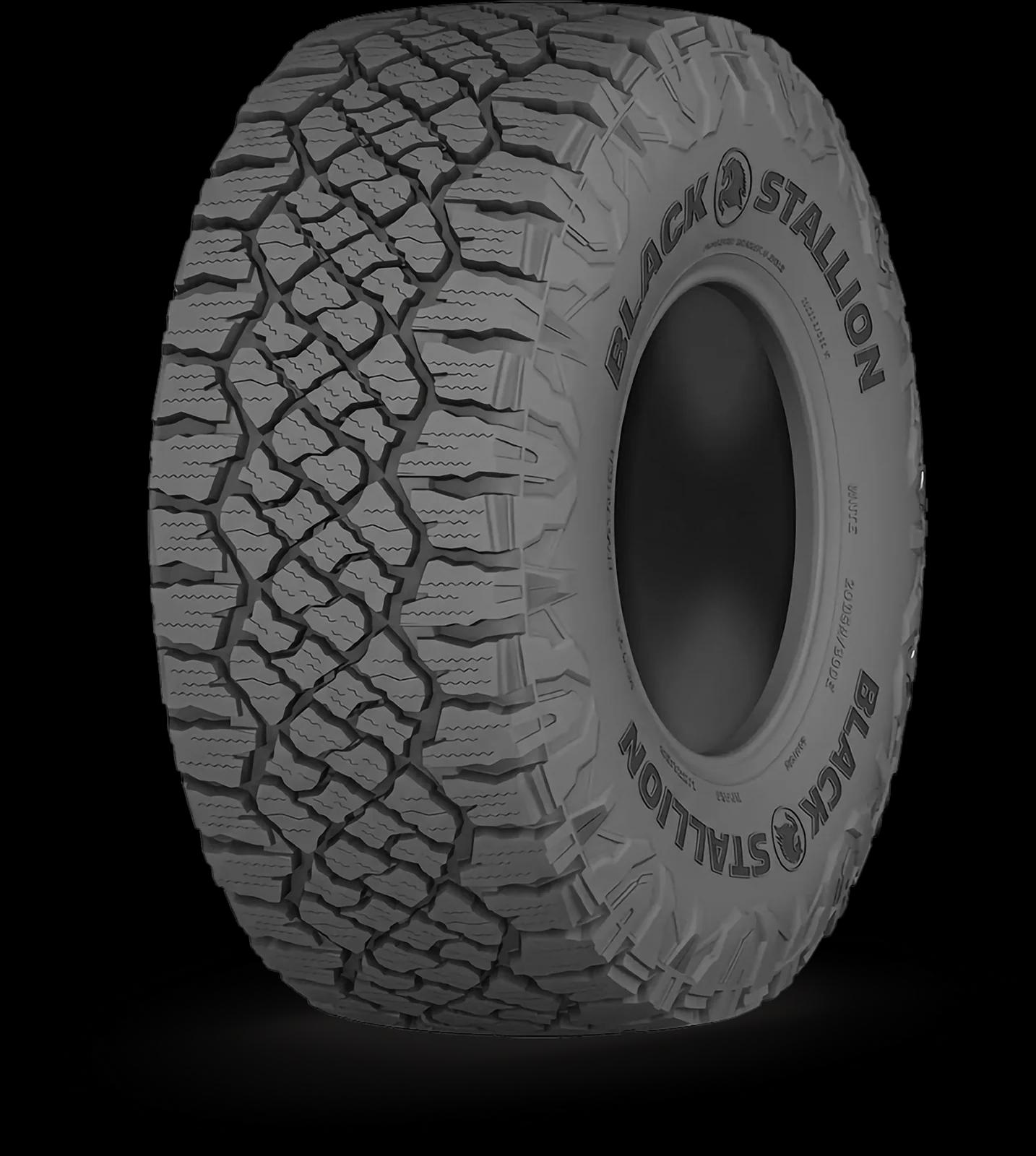
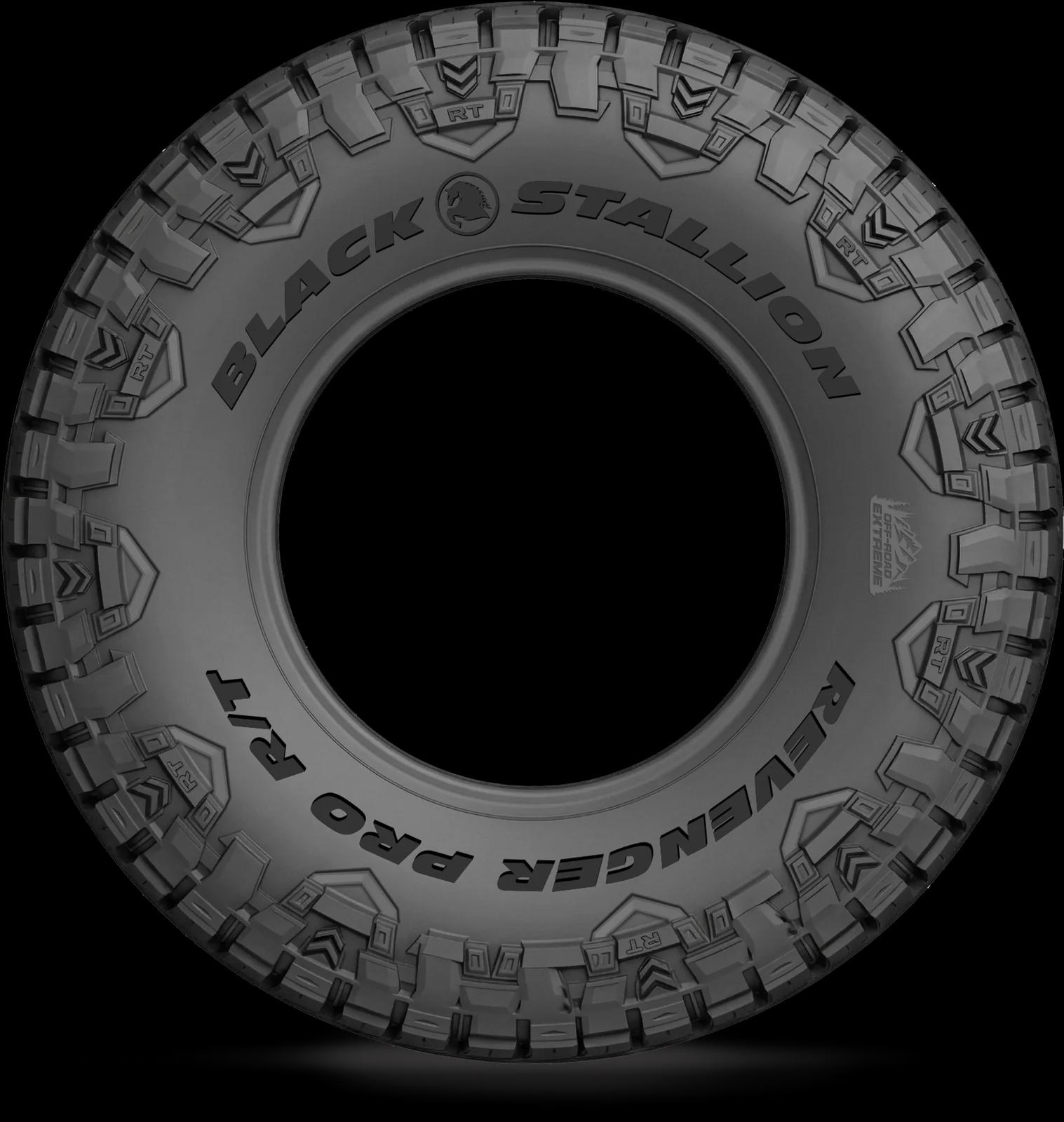
The Revenger Pro A/T is an all-terrain tire: an everyday truck and SUV tire that also handles gravel, mud and light snow, with 12–15/32″ of tread. The Revenger Pro R/T is a rugged-terrain tire with a more aggressive tread and deeper 15–17/32″ depth for rock, mud and sand, while staying civil on pavement. If most of your miles are on the road, start with the A/T; if you’re regularly on rough trails, look at the R/T.
Compare them side by side →What does LT mean, and do I need LT tires?
LT (light truck) tires are built with stronger construction and are rated by load range (C, D, E…) to carry heavier loads at higher pressures. Three-quarter and one-ton trucks, and trucks that tow or haul heavy loads, generally need LT tires. Half-ton trucks and SUVs often come with passenger (P-metric or XL) tires; LT tires will fit many of them but ride firmer and need different pressures. Your dealer can match the load rating to your vehicle.
Read your sidewall →What does XL mean?
XL (extra load) marks a passenger tire with reinforced construction that can carry more weight than a standard-load tire of the same size when inflated to its higher rated pressure.
Can I go up a size?
Often, yes. Keep the new size’s overall diameter within about 3% of the original so the speedometer, ABS and stability control stay accurate, keep the load index at or above the original, and check clearance through full steering lock and suspension travel. Larger changes usually need a lift or leveling kit.
Search by rim and tire height →Are Black Stallion tires good in snow?
Venture A/S, Apex Sport A/S, Cruise H/T, and Revenger Pro A/T are designed to handle light snow as part of year-round driving. For regular deep snow and ice, a dedicated winter tire marked with the three-peak mountain snowflake symbol is the safest choice.
Ownership
When should I replace my tires?
Replace at 2/32″ of tread, the legal minimum in most states, and consider replacing at 4/32″ if you drive in rain or snow. Replace sooner for sidewall cracks, bulges, exposed cords or a repair outside the tread area. Many vehicle makers also recommend replacing tires six years after manufacture regardless of tread.
Tire care guide →What pressure should I run?
Use the pressure on your vehicle’s door-jamb placard, checked cold. The number on the sidewall is the tire’s maximum, not the recommended pressure. If you’ve changed to a different size or load range, ask your dealer for the correct pressure from the load and inflation tables.
How often should I rotate?
Every 5,000–7,500 miles, or as your vehicle’s owner’s manual specifies.
How do I register my tires?
Registration lets the manufacturer contact you if there’s ever a recall. Your installing dealer should register your tires or give you a registration card with each tire’s DOT code. Keep your receipt and note the DOT codes.
Warranty & support →How do I check for a recall?
Search by the tire identification number (the DOT code on the sidewall) on the U.S. National Highway Traffic Safety Administration recall site, NHTSA.gov.
NHTSA recall lookup → (opens in a new tab)Buying
Can I buy directly from Black Stallion?
Black Stallion tires are sold and installed through tire dealers. Ask your local tire shop to order them, or contact us and we’ll point you to a dealer.
Contact us →I’m a tire dealer. How do I carry Black Stallion?
Send a dealer inquiry with your business details and ZIP code and our sales team will be in touch.
Dealer inquiry →How do I make a warranty claim?
Start with your selling dealer, who can inspect the tire. You can also file a claim online with photos of your receipt, the tire’s DOT code and the issue, plus your dealer’s details and the approximate mileage.
File a warranty claim →